Company org chart examples
Six fictional company org chart examples — functional, flat, divisional, small business, agency, and matrix — with layouts you can copy in the free editor.
Org chart shapes are really reporting shapes — who sits at the top, how many layers exist, and whether people group by function, product, or region. Below are fictional companies drawn in Simple Org Chart so you can see the difference, not just read about it.
New to the topic? Start with what is an organizational chart. Ready to build? Create an org chart in the free editor or import a CSV template.
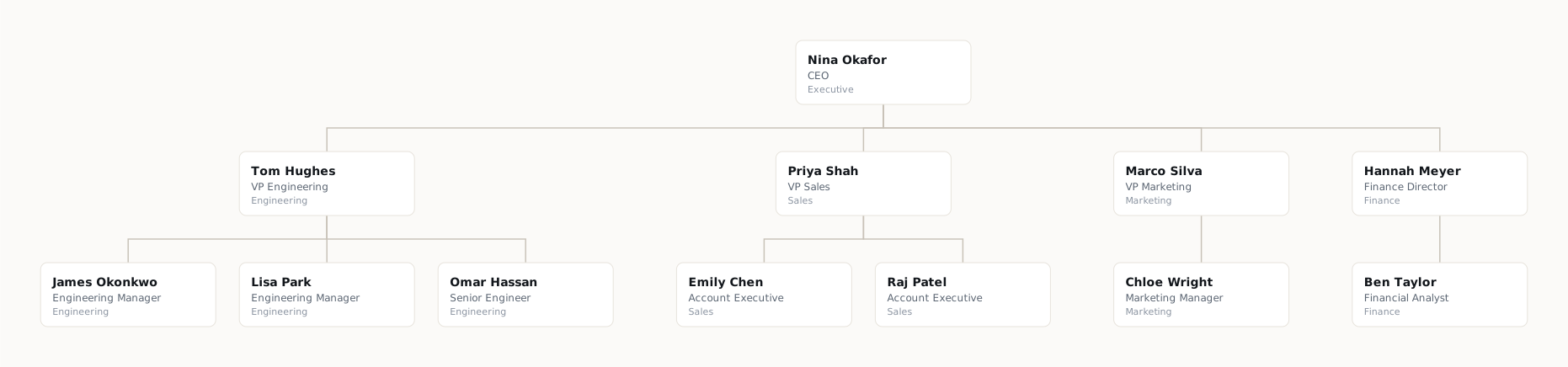
Small company (functional structure)
What you are looking at: specialist teams (engineering, sales, marketing, finance) each with their own chain of command.
When it fits: most companies past ~20 people — clear ownership by discipline, easier budgeting by department.
Trade-off: cross-functional projects can feel slow; a product squad may report through different VPs.
Create an org chart like this — start with a CEO and add each department head as a direct report.
Growing company (flat startup structure)
What you are looking at: one leader with a wide set of direct reports and few (or no) layers in between.
When it fits: early startups, small teams where everyone talks daily anyway.
Trade-off: does not scale — beyond ~10 direct reports, founders become bottlenecks; you eventually add managers and drift toward functional.
Make your own flat org chart — add the founder first, then each direct report.

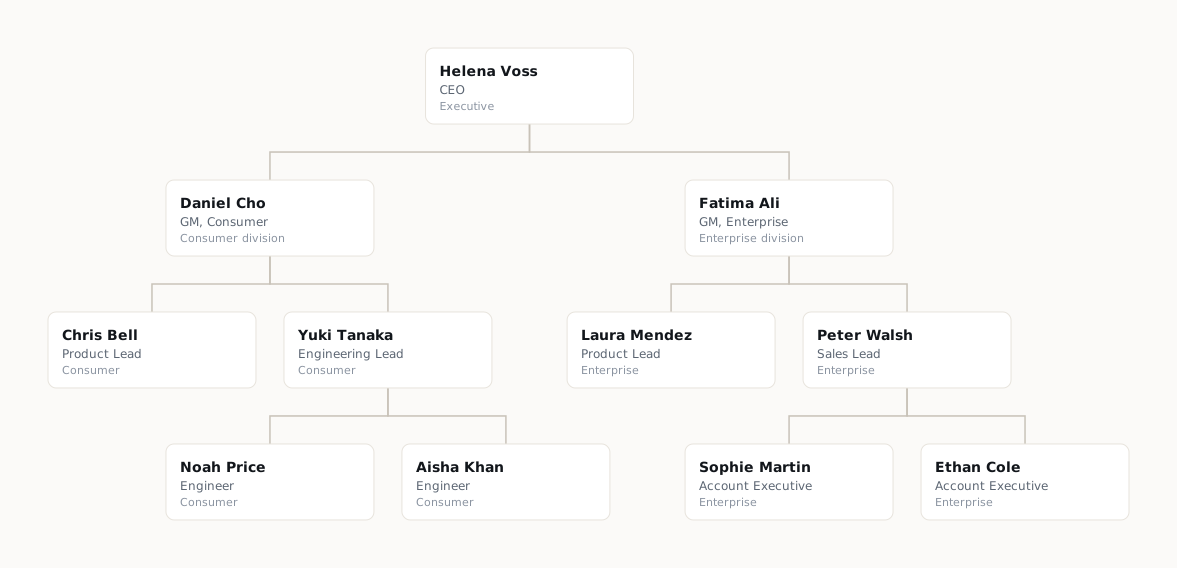
Corporate structure (divisional)
What you are looking at: semi-autonomous divisions (by product line, region, or customer type), each with its own mini-hierarchy.
When it fits: companies selling distinct products to distinct markets; P&L ownership per division.
Trade-off: duplicated roles (two HR teams, two finance leads); needs strong coordination at the centre.
Build a divisional org chart — add a CEO, then a GM per division with their own teams underneath.
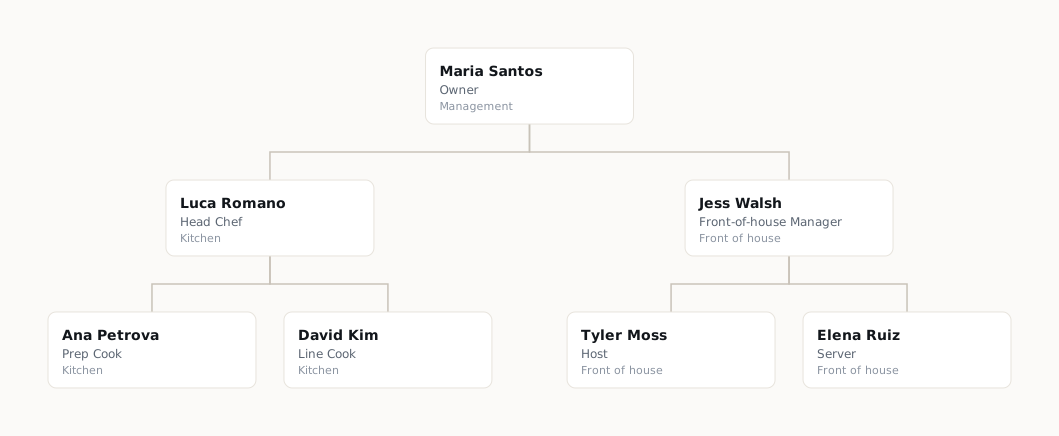
Simple team structure (small business)
What you are looking at: a short hierarchy tied to how the business actually runs — kitchen vs front of house, not abstract “departments”.
When it fits: restaurants, shops, clinics — anywhere the legal org is small but roles are clear.
Trade-off: too simple for investor decks once you add regional managers; still useful for staff clarity.
Create a simple team org chart — often three layers is enough for a small business.
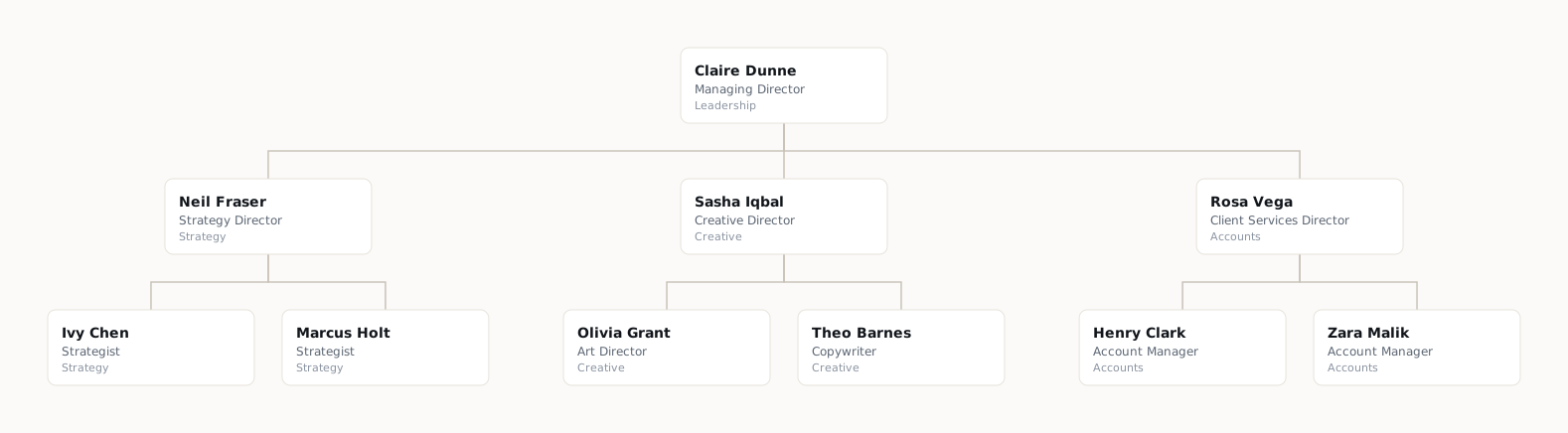
Department structure (agency)
What you are looking at: strategy, creative, and accounts as parallel branches — common in agencies and professional services.
When it fits: project businesses where work is staffed from functional pools.
Trade-off: client teams are matrix-like in practice even if the chart shows solid lines.
Try the free org chart maker with one branch per department.
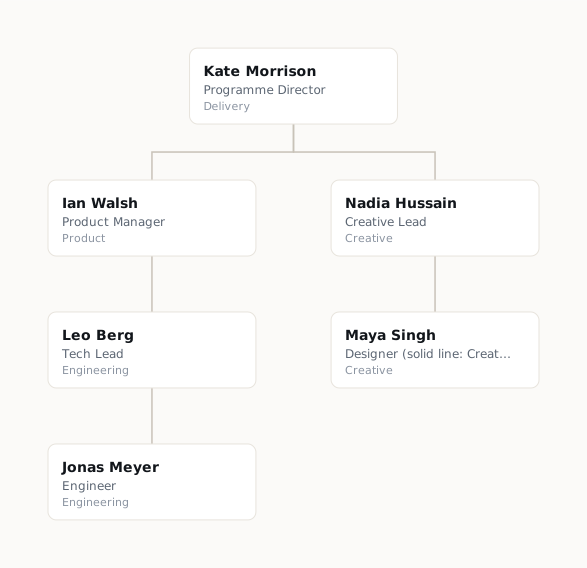
Matrix-style reporting (simplified)
Real matrix orgs have two managers per person. Simple Org Chart models one solid reporting line; use job titles or notes for secondary relationships, or draw separate project charts.
When it fits: programme delivery, consulting, R&D — where skills and projects do not line up neatly.
Trade-off: charts alone cannot capture dual accountability; conversations still matter.
Build your version
Pick the shape closest to your reality, follow the create guide, drag to match your actual lines, then export PNG when you need it elsewhere. Not sure which tool to use? See best free org chart software.
Draw your structure
Use these examples as a reference — then build your own chart in the editor.
Create an org chart